Kitchen wall panels

The kitchen is where everything happens, and it often sounds like it. Kitchen wall panels bring warm wood into the busiest room in the house and soften the clatter of pans, plates and conversations. Use them in open-plan kitchens and kitchen-dining spaces, away from the hob and sink. Explore real kitchens built with WoodUpp and find the finish for yours.

Lire la suite

The kitchen is where everything happens, and it often sounds like it. Kitchen wall panels bring warm wood into the busiest room in the house and soften the clatter of pans, plates and conversations. Use them in open-plan kitchens and kitchen-dining spaces, away from the hob and sink. Explore real kitchens built with WoodUpp and find the finish for yours.

Warmth in a room of hard surfaces

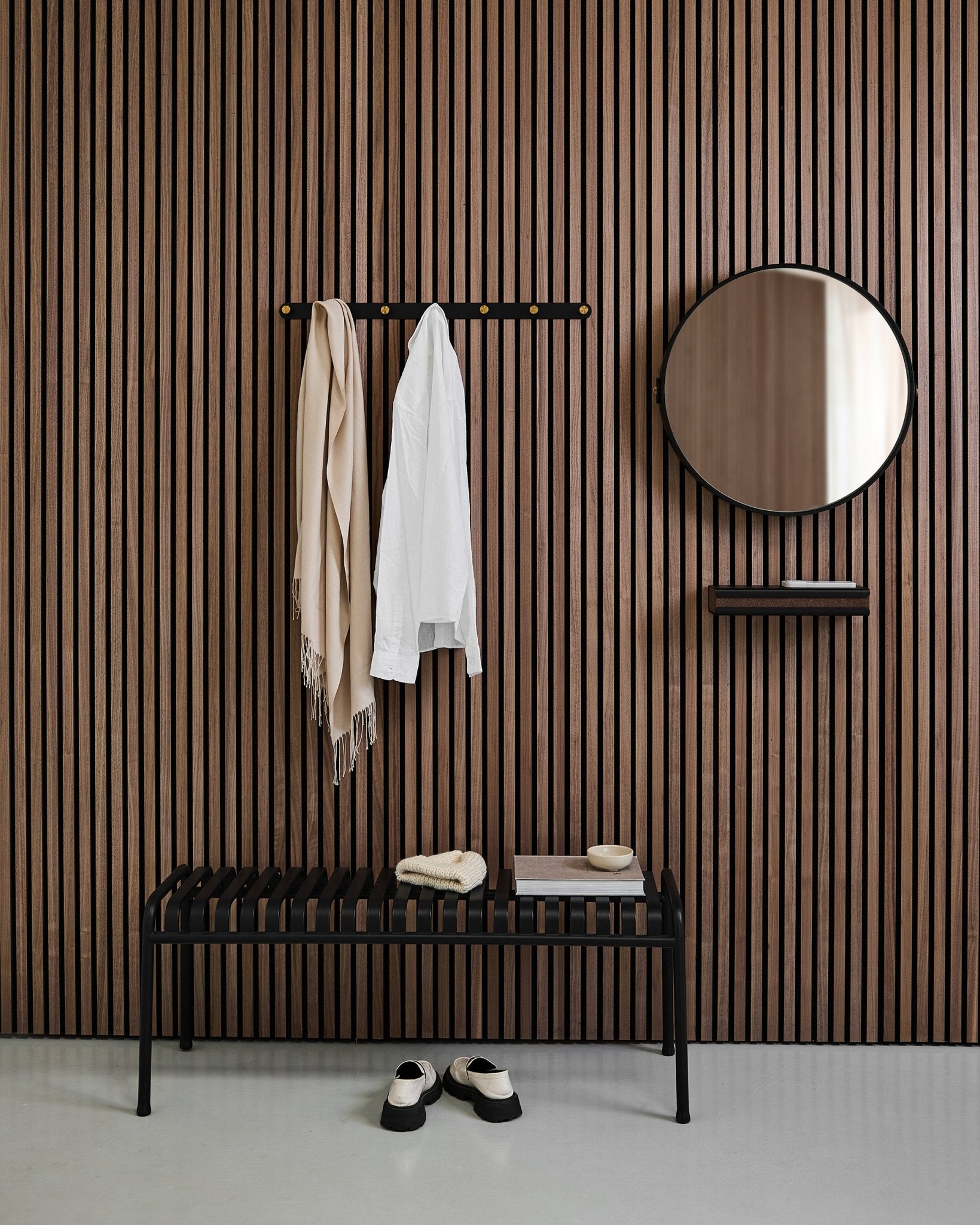
Kitchens are full of tiles, stone, glass and steel. They’re practical, but they can make a room feel cold and loud. A panel wall adds a natural texture that balances all those hard surfaces. Panel the wall at the end of the kitchen island, around a breakfast nook or across the wall that connects the kitchen and living area. Slats in oak or walnut tones go well with both white and dark cabinets.

Less noise in an open-plan kitchen

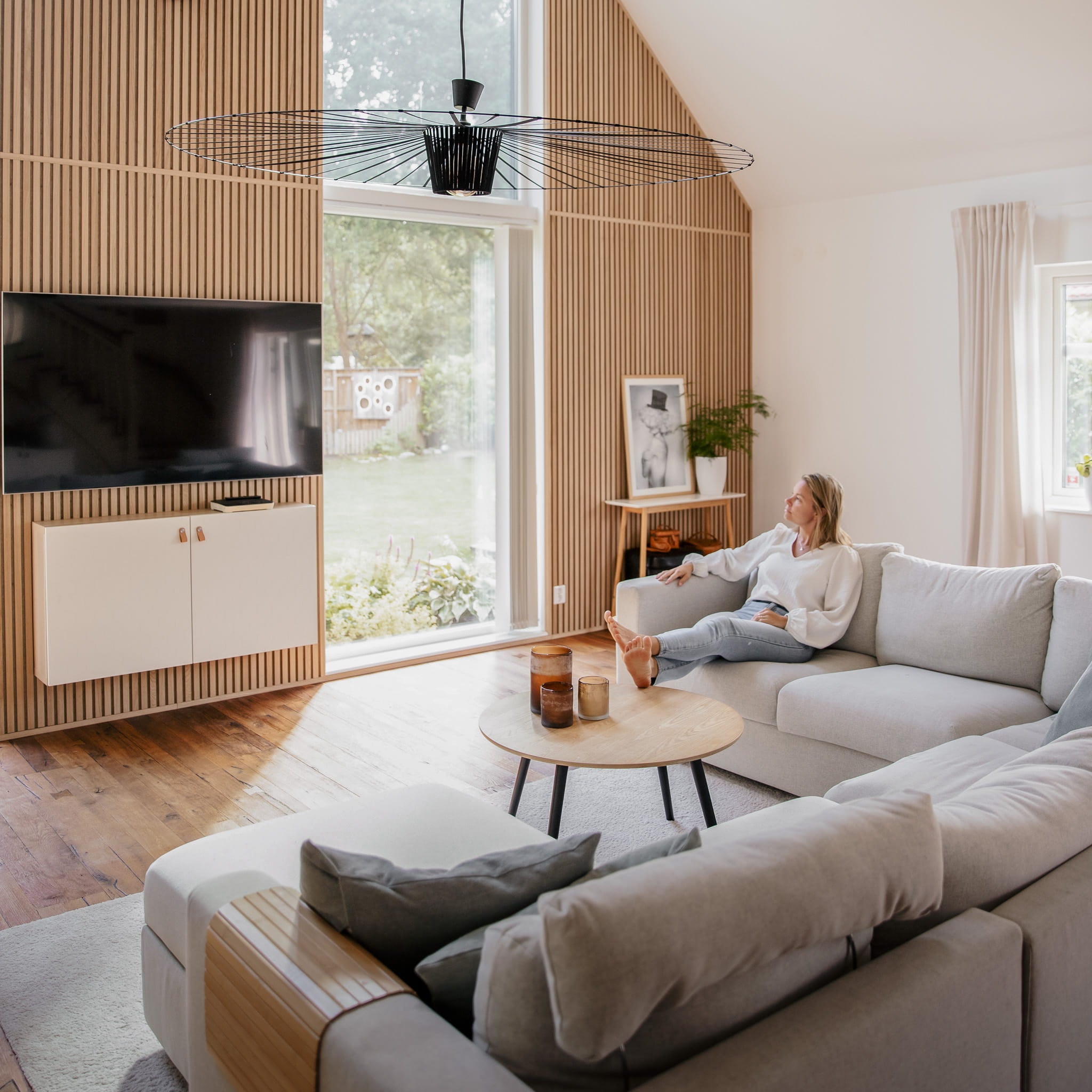
In an open-plan home the kitchen sets the sound level for the whole room. The dishwasher, the extractor fan and people cooking together all travel across the space. Every Akupanel has an acoustic felt backing with Class A sound absorption. Panels on the walls or ceiling reduce that echo, so cooking and conversation can happen at the same time.

Choose an easy-to-clean finish

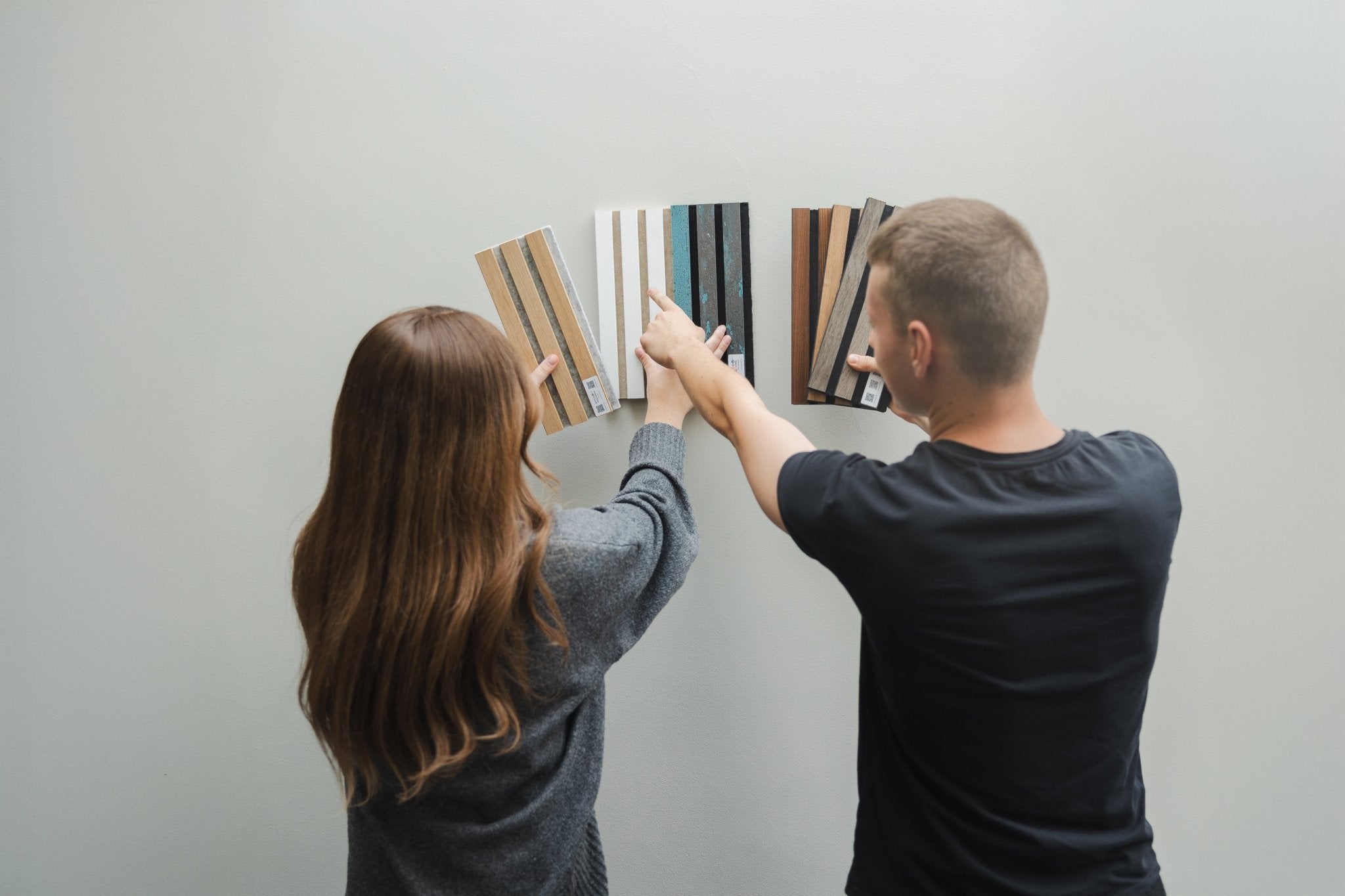
Kitchens need surfaces that keep up with daily life. Our wood-like Akupanels have a foil wrapped fully around each slat. They keep their color and can be wiped clean with a damp cloth. Natural wood Akupanels bring real grain and need only a soft brush or a well-wrung cloth. Whichever you choose, place the panels away from the hob, the sink and other areas with direct water, grease or steam. [VERIFY — humidity range]

Where kitchen wall panels work best

The best places are the walls next to the cooking zone, not behind it: the kitchen island, the dining corner, the wall facing the living room or the ceiling above the table. For the wall directly behind the hob or sink, keep a splashback in tile, glass or stone.

Shelves and storage on the wall

Create accessories clip between the slats without drilling, so you can add shelves for cookbooks and jars, hooks for towels or a magnetic board for the shopping list. Move them when you need the space for something else.